DevMLOps: The Ultimate Guide to Streamlining Machine Learning in Production


Ciphered Flow Team
February 1, 2026
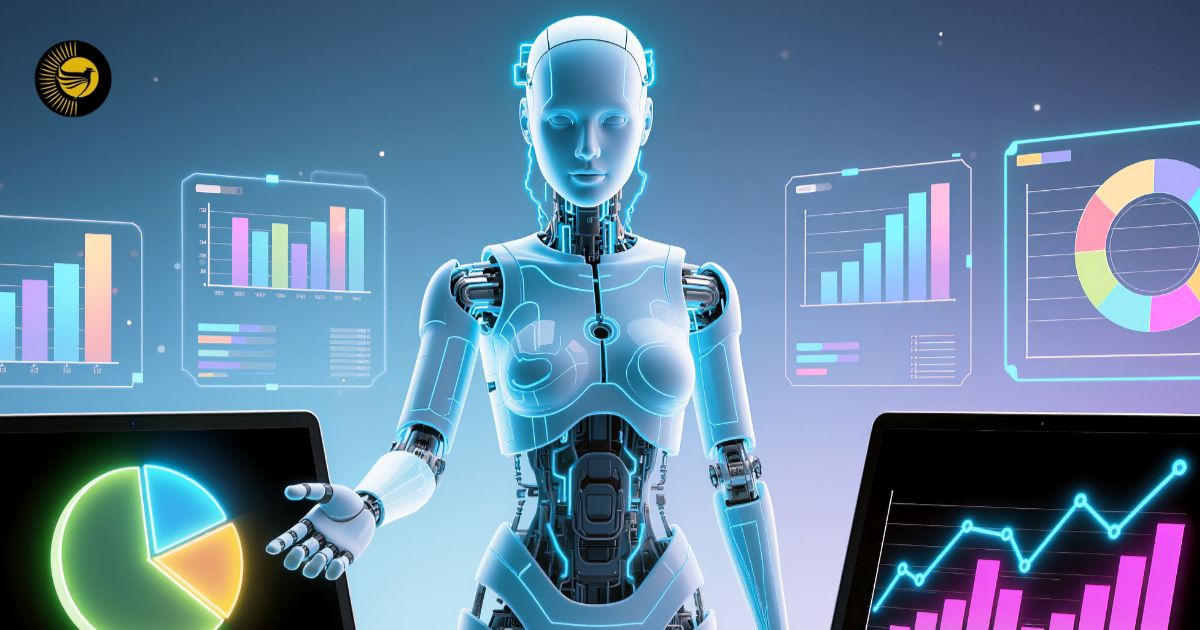
Artificial Intelligence is evolving rapidly, moving beyond simple automation toward systems that can create, reason, and act independently. Two of the most important concepts shaping this evolution are Generative AI and Agentic AI. While Generative AI focuses on creating content, Agentic AI emphasizes autonomous decision-making and goal execution. This blog explains both concepts clearly, highlights their differences, and explores their real-world impact.
Generative AI refers to artificial intelligence systems designed to generate new content such as text, images, videos, audio, and code. These systems learn patterns from large datasets and use that knowledge to create outputs that closely resemble human-created content.
Generative AI is widely used in creative, analytical, and business applications where speed, personalization, and scalability are critical.
Generative AI is built on large-scale models trained on massive datasets. These models understand language, images, or patterns and generate relevant outputs based on prompts.
Models are trained using techniques such as deep learning and neural networks, enabling them to predict the next word, pixel, or data point with high accuracy.
Users interact with Generative AI through prompts. The quality of output depends heavily on how clearly and precisely the prompt is defined.
Generative AI is used to create blog posts, marketing copy, social media content, and video scripts.
It helps generate images, videos, music, and visual designs for creative industries.
Developers use Generative AI for code generation, debugging, and documentation.
Businesses leverage Generative AI for personalized campaigns, customer communication, and data-driven insights.
Agentic AI refers to artificial intelligence systems that can autonomously plan, make decisions, and take actions to achieve specific goals. Unlike traditional AI systems that respond only to instructions, Agentic AI operates with a degree of independence.
Agentic AI systems can evaluate situations, choose strategies, adapt to changes, and execute tasks without continuous human input.
Agentic AI is designed around objectives. Once a goal is defined, the system determines the steps required to achieve it.
These systems analyze context, assess possible actions, and select the most effective path toward the goal.
Agentic AI monitors outcomes, learns from results, and adjusts its actions dynamically for better performance.
Agentic AI powers self-managing systems such as autonomous robots, intelligent agents, and smart assistants.
It can manage workflows, allocate resources, and optimize operations with minimal human supervision.
Advanced AI agents can handle multi-step tasks such as scheduling, research, and decision support.
Agentic AI can detect threats, respond to incidents, and adapt defense strategies in real time.
Generative AI focuses on content creation, while Agentic AI focuses on autonomous action and goal execution.
Generative AI operates based on user prompts, whereas Agentic AI can operate independently once goals are set.
Generative AI produces content, while Agentic AI produces actions and decisions.
Generative AI is reactive, and Agentic AI is proactive.
Both technologies reduce manual effort and accelerate workflows.
AI systems can perform tasks at scale without proportional increases in cost.
Agentic AI enhances operational decisions, while Generative AI supports creativity and ideation.
Organizations using these technologies gain speed, efficiency, and innovation capabilities.
Autonomous AI systems raise concerns about decision ownership and responsibility.
Both forms of AI rely heavily on data, making privacy and security critical issues.
AI-generated outputs and decisions may reflect biases present in training data.
Clear frameworks are needed to ensure safe and responsible AI adoption.
The future of AI lies in the convergence of Generative and Agentic systems. Generative AI will provide creativity and intelligence, while Agentic AI will execute tasks and decisions autonomously. Together, they will enable advanced AI agents capable of reasoning, acting, and learning continuously.
Agentic AI and Generative AI represent the next phase of artificial intelligence evolution. While Generative AI transforms how content and ideas are created, Agentic AI redefines how tasks and decisions are executed. Understanding both concepts is essential for businesses, professionals, and learners preparing for the AI-driven future.