How to Become a Scrum Master in 2026: A Complete Beginner’s Guide


Ciphered Flow Team
February 1, 2026
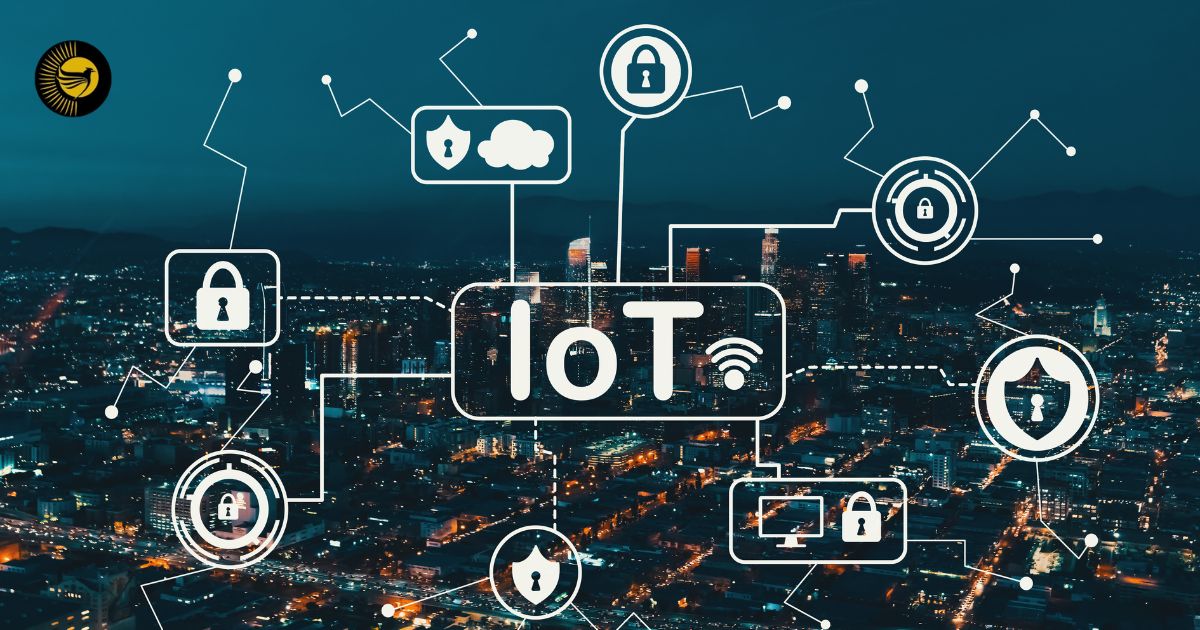
The Internet of Things (IoT) is transforming how the physical and digital worlds interact. From smart homes and wearable devices to industrial automation and smart cities, IoT enables everyday objects to collect, share, and act on data intelligently. This blog explains IoT in a clear, structured, and easy-to-understand format.
The Internet of Things (IoT) refers to a network of physical objects—known as things—that are embedded with sensors, software, and connectivity. These devices collect and exchange data over the internet without requiring direct human intervention.
IoT allows systems to sense, analyze, and respond in real time, improving efficiency, accuracy, and decision-making across industries.
IoT devices are equipped with sensors that capture data such as temperature, location, motion, pressure, or heart rate. These sensors act as the foundation of any IoT system.
Once data is collected, it is transmitted to cloud platforms or servers using communication technologies such as Wi-Fi, Bluetooth, cellular networks, or LPWAN.
The received data is processed using analytics tools and algorithms. Insights generated from this data help systems make automated decisions or trigger alerts.
Processed information is delivered to users through dashboards, mobile apps, or control systems, allowing monitoring, control, and automation.
Hardware includes sensors, actuators, embedded systems, and physical devices that interact with the environment.
IoT software manages data collection, device communication, analytics, and automation workflows.
Cloud platforms store large volumes of IoT data and provide scalability, processing power, and integration with other systems.
Protocols such as MQTT, HTTP, and CoAP ensure reliable and secure communication between IoT devices and servers.
Includes smart home devices such as smart lights, thermostats, wearables, and voice assistants.
Used in manufacturing, energy, and logistics for predictive maintenance, automation, and operational efficiency.
Applied in healthcare, retail, transportation, and smart buildings to improve services and reduce costs.
Supports smart cities through traffic management, waste management, water monitoring, and public safety systems.
IoT automates repetitive tasks and improves operational efficiency across processes.
Devices provide continuous, real-time insights, enabling faster response and better decision-making.
Predictive maintenance and optimized resource usage help reduce operational costs.
Personalized and intelligent systems enhance convenience and customer satisfaction.
IoT enables home automation systems for lighting, security, appliances, and energy management.
Wearable devices and remote monitoring systems improve patient care and diagnostics.
IoT supports precision farming through soil monitoring, irrigation control, and crop health analysis.
Smart factories use IoT for predictive maintenance, quality control, and production optimization.
IoT improves fleet management, traffic control, and vehicle tracking.
Large volumes of connected devices increase vulnerability to cyber threats and data breaches.
Different devices and platforms may struggle to work together seamlessly.
Handling massive amounts of real-time data requires robust infrastructure and analytics.
As IoT networks grow, maintaining performance and reliability becomes more complex.
The future of IoT lies in integration with artificial intelligence, edge computing, and 5G networks. These advancements will enable faster processing, smarter automation, and more secure systems, driving widespread adoption across industries.
The Internet of Things is revolutionizing how we interact with technology by connecting physical objects to the digital world. With applications ranging from smart homes to industrial automation, IoT continues to shape the future of innovation, efficiency, and intelligent decision-making.
Reach out to our support team for quick assistance and expert guidance.